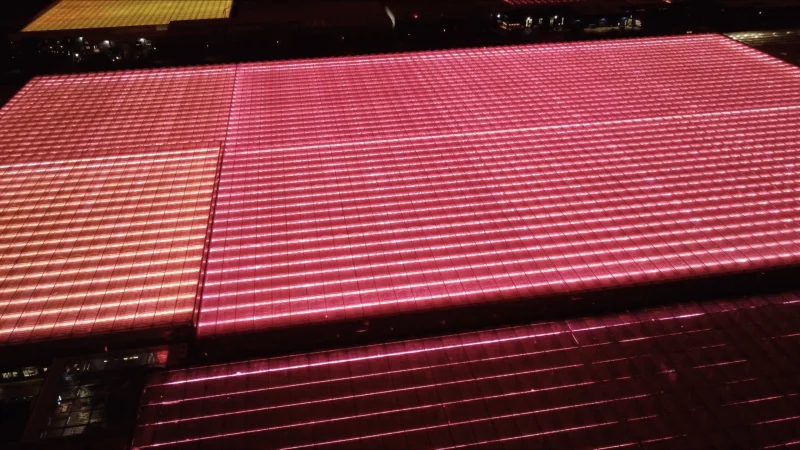
Tholen – At the recent Canadian Greenhouse Conference, attendees got a glimpse of Dutch Lighting Innovations’ (DLI) new global brand positioning. Behind this revised brand positioning which has since been officially unveiled lies the story of an LED supplier that has rapidly grown into a major, internationally operating player, currently employing around 200 people. CEO Pim van Eijk revealed DLI’s plans at the conference. “We’ve achieved our 2025 goal and are now working on the 2030 plan.”
Dutch Lighting Innovations was founded in 2015. Starting in 2020, under the leadership of a new management team, the company fully committed to the transition to LED. Eventually, DLI began manufacturing its own LED fixtures. For years, the focus was strongly on developing and producing new products. Pim: “We’ve been continuously busy making and selling products. Partly due to the enormous growth, production was the steering wheel, the gas pedal, and the clutch of the company.”
Little by little, DLI gained more and more market share. DLI lamps were installed in an increasing number of greenhouses. The first generation of lamps has now been in use here for about 5-6 years. You can see that there’s almost no decline in light output, and the failure rate is very low. Large growers have this checked annually through light measurements. The quality of our products is incredibly high, which is why we eventually asked ourselves: “We know we’re good at what we do, but how are we going to communicate that to the market?”
Focus on Results
As part of DLI’s new strategic direction, the company aims to emphasize these results more. This puts the grower at the center. This was already reflected in Canada on a new green-and-black trade show banner, which for years had previously featured only LED lamps. We want to share more results to show what we’ve achieved together with our customers.”
In recent years, the transition to LED has progressed rapidly. With the help of subsidies, growers quickly switched to more energy-efficient lamps. In some markets, however, that flow of subsidies has since diminished. Thanks to the equally rapid development of LED lamps themselves, more and more greenhouses are now equipped with the latest lamps featuring the latest technologies. With each new generation, LED lamps have improved by a certain percentage. “But you can see that development curve slowly flattening out,” says Pim.
Data and Control
The biggest strides in LED efficiency have already been made. The CEO of DLI therefore expects that the market’s focus will shift to control systems in the near future.
“That’s why we’ll be launching a new control system next year.”
Another development DLI is focusing on is the integration of LEDs into the greenhouse. Data plays a key role in this. Growers don’t just want to control the lights; they also want to receive data from the greenhouse.”
With data on lighting conditions in the greenhouse, growers can further optimize their cultivation. We still see that, due to a lack of knowledge, LEDs aren’t always used effectively. As a result, growers aren’t meeting their goals. For us as an LED supplier, it’s crucial that growers are able to get the most out of their crops using LEDs
Turning Higher Light Levels into Increased Production
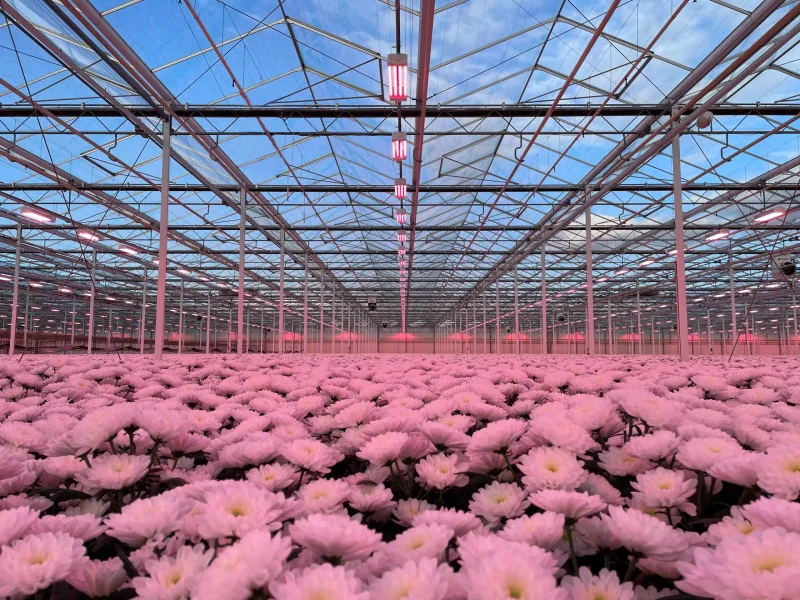
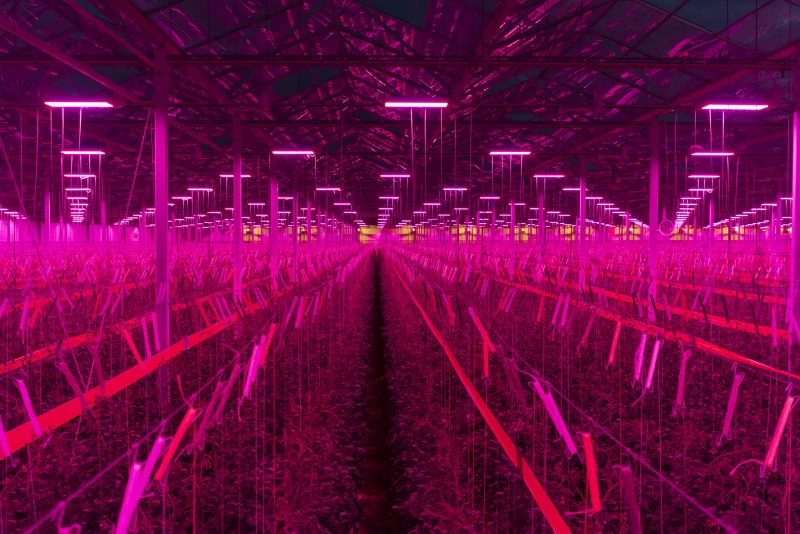
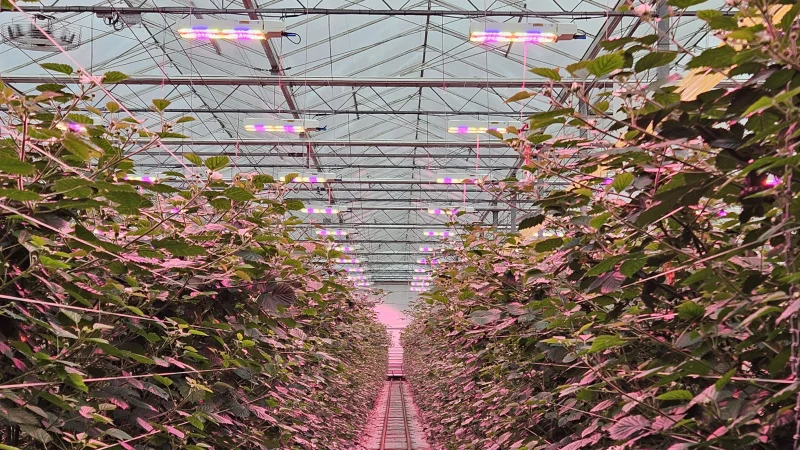
For DLI, the key focus for the coming years is therefore optimizing results with existing LED installations. Pim notes that the light levels used in greenhouses are steadily increasing. The crop must continue to be able to optimally convert these ever-greater amounts of light into production. iWe’re going to ensure that growers can continue to convert these increasingly higher light levels into higher yields.”
The CEO is aware that other links in the chain also play a role here, such as breeders who can develop new varieties that cope even better with high light levels-for example, in tomatoes. Research this year showed that light utilization efficiency under
LED lighting is not yet optimal.
“We all want to produce even more food per square meter, but there isn’t always room to expand greenhouses. How great would it be if we could increase production per square meter through optimal use of lighting?” In countries where greenhouse acreage is declining, such as the Netherlands, higher efficiency per square meter can compensate for the loss of acreage.
North America
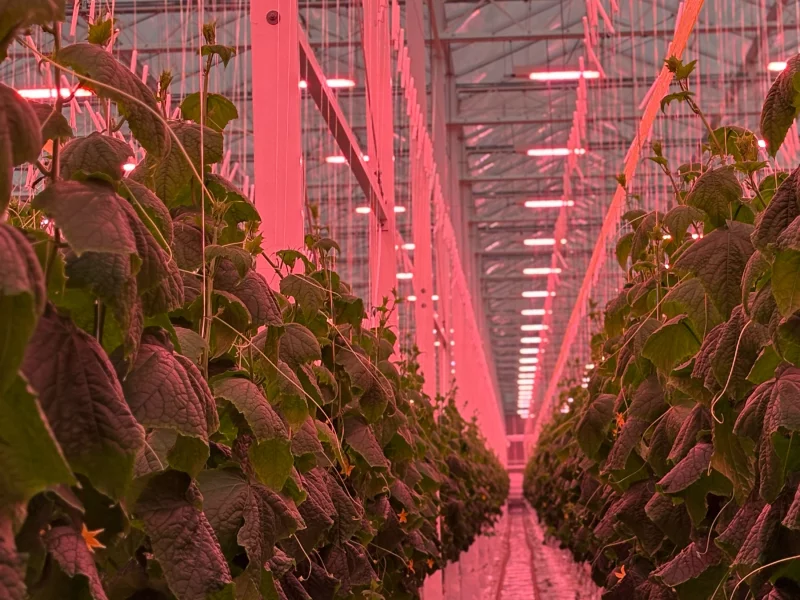
Greenhouse horticulture is a major market for DLI, but the company is also active in indoor and vertical farming. We’ve been active in the indoor market for over 10 years: we’ve completed a number of large projects again this year. Our focus for vertical farming is on Western Europe, but we’re now also receiving inquiries from North America.”
A key development for DLI in the North American market is the partnership with
P.L. Light Systems Canada. #This partnership helps us provide high-quality local services. Growers find that important. We can also now manufacture products more efficiently and are closer to the marketi By 2027, DLI will also be adding a new sales manager for the North American market. “But we’ll remain DLI and won’t become CLI,” Pim laughs.
Asian Market
Still, DLI’s international growth is remarkable. What not everyone knows is that DLI has had a similar partnership with a Chinese partner for several years now, focused on the Asian market. “We supply LED fixtures to growers in Japan, South Korea, and China, among other places.” Pim explains that collaborations with partners in North America and China are important for the company’s international ambitions. We wanted to be able to assemble in multiple locations for greater flexibility. We still do the final stage of assembly for the European market in the Netherlands, but we can now also do that in Canada for the North American market.”
What would you have done differently?
DLI has now gained a firm foothold in many regions. The company currently sees growth opportunities in countries that, until recently, received little attention-for example, in more southern countries such as Mexico or Spain.We sold our first project in Mexico this year.”
DLI has a strong presence with its LED lamps in tomato and cucumber cultivation, among other crops. There is still room for growth in other crops. As an example, Dennis Janmaat, Sales Director at DLI, cites research into eggplant cultivation in which DLI is currently participating. Eggplant growers continue to seek out options for lighting their crops. DLI wants to help them with this, just as the growing lighting company aims to support growers even better in optimizing their lighting under its newly chosen strategic direction. You have to dare to ask the question: “What would you have wanted to be done differently?” says Pim. “Then you get answers and information that help you move forward.”

Let's talk about your harvest?
We are happy to talk it through. Just reach out with any questions.