

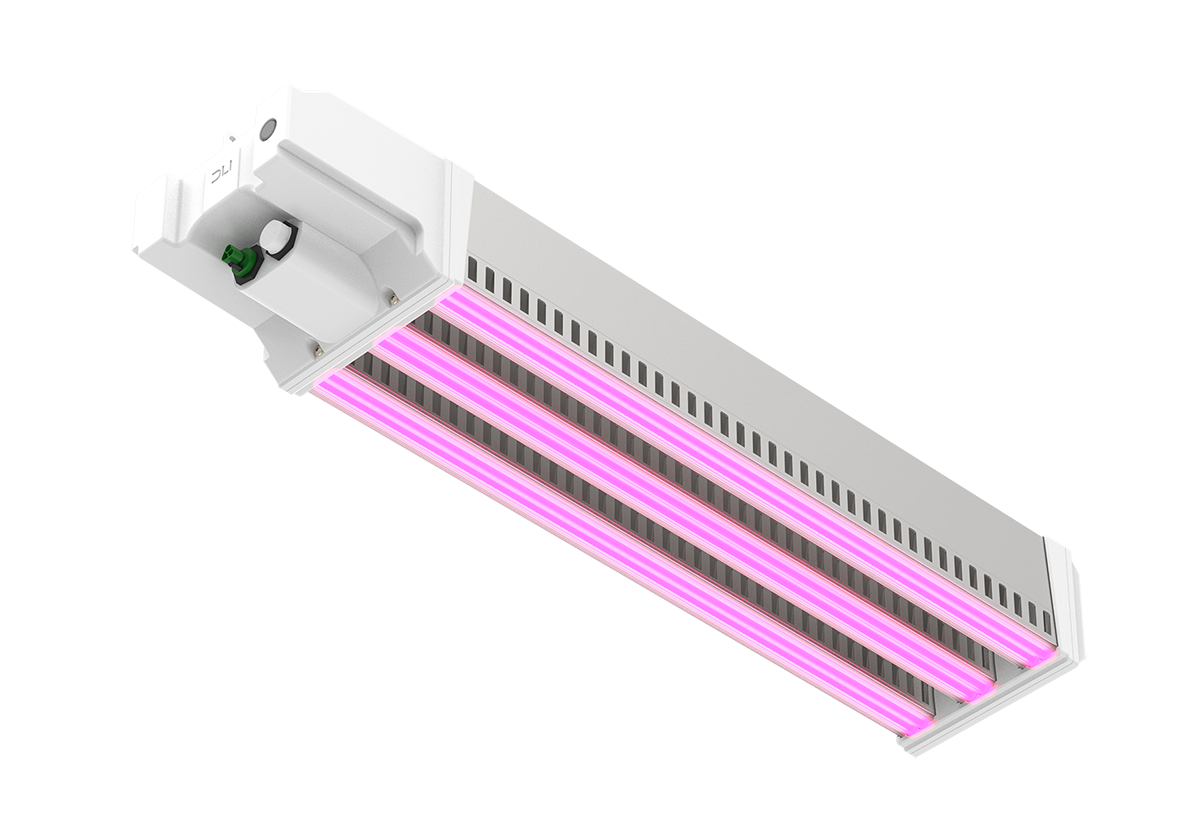
Figure 1: High-efficiency linear horticultural LED fixture featuring a multi-bar optical design for uniform light distribution
We outline the steps involved in integrating LEDs, chips, driver electronics, and related components onto a circuit board, which together enable a wide range of applications, including horticultural lighting (Figure 1). All these aspects must be considered when designing a lighting fixture, as its efficiency and lifespan are ultimately shaped by the following critical factors: the quality of the individual LEDs, the reliability of the drivers and electronic components, the fixture assembly and thermal management, and the design and durability of the optical elements.
AC, DC, and the Principles Behind Efficient Power Transmission and Device Operation
The flow of electrons forms an electric current measured in amperes (A), which indicates the amount of electric charge that passes a given point per second. The force that drives these electrons through a circuit is the voltage, which pushes them from the negative to the positive side. Voltage is supplied by the power company and determines how strongly current flows through the system. When voltage and current are considered together, they determine the total electrical power, expressed as wattage. In other words, wattage reflects the amount of current flowing and the rate at which energy is delivered.
Thomas Edison developed direct current (DC) for electrical devices, while Nikola Tesla introduced alternating current (AC) and helped establish it as the primary method for transmitting electricity over long distances. In households, wall sockets supply AC power, in which the direction of electron flow continuously alternates (Figure 2). In contrast, most electrical devices, including LED fixtures, operate on DC, which provides a steady flow of electrons from the negative to the positive terminal. If AC were supplied, the lights would flicker. Power stations transmit electricity as AC because transformers can efficiently increase or decrease voltage. High-voltage transmission is essential for long-distance transport: at high voltages, the current remains low, minimising resistive losses and preventing excessive heating of power lines.
Figure 2: Direct Current (DC) provides a constant voltage over time, whereas Alternating Current (AC) sequences between positive and negative values. LED drivers convert AC to stable DC to ensure consistent light output and prevent flicker (source: mrelectric),
With these fundamentals of electricity in place, we can consider the components of a lighting fixture and how electrical losses are minimised through efficient AC-to-DC conversion. Effective conversion reduces heat generation in both the LEDs and the fixture, allowing the system to operate more efficiently with less power loss and extend its overall lifespan.
Printed Circuit Boards
In our previous article, we discussed the manufacturing process of LEDs. From here on, they must be installed on a printed circuit board (PCB), which serves as the electrical and thermal backbone of any high-performance LED fixture (Figure 3). Their design determines how efficiently current is distributed (so LEDs operate at lower temperatures!) and ultimately how long the LEDs will last.

Figure 3: Printed circuit boards (PCBs) where light-emitting diodes are placed on a metal-core material for effective heat dissipation.
To minimise energy losses, the PCB must offer the lowest electrical resistance, allowing a stable current with minimal voltage drop across the circuit. The spacing between individual LEDs is not random; it is calculated to balance light distribution with thermal management, thereby preventing high LED temperatures that can degrade light output and reliability.
Metal-core PCBs are used because their high thermal conductivity leads to efficient heat dissipation from the LED junction into the cooling profile or heat sink. A larger contact area between the PCB and the cooling structure improves heat transfer. Consequently, fixture design plays a critical role in directing heat away from the LED, through the PCB, into the heat sink, and ultimately into the surrounding air by convection. To support this process, the fixture design at Dutch Lighting Innovations utilises the natural Venturi effect to increase the cooling capacity (Figure 4). As warm air rises through the fixture and enters narrower air channels, the reduction in cross-section increases air pressure. As air exits the channel and pressure decreases, it draws cooler surrounding air into the heat sink. This continuous airflow increases the rate of heat removal from the fixture by convection.

Figure 4: As air flows through the narrowed section of the fixture, air pressure decreases. This Venturi-induced low-pressure region pulls in cooler surrounding air, improving heat dissipation and stabilising LED operating temperature (revised source: NASA)
Driver
Ballasts are used in high-intensity discharge lamps, such as high-pressure sodium and metal-halide systems, because these lamps require a high voltage to turn on and a controlled, lower current to remain stable without burning out. LEDs, however, are semiconductors and do not require a high ignition voltage. Instead, the driver, functionally acting like a ballast, converts the incoming AC to a stable, low-voltage DC supply, ensuring a constant current. Because LEDs do not experience the high start-up voltages typical of discharge lamps, they are subjected to far less thermal and electrical stress. This contributes to their longer operational lifetime.
However, when AC is converted to DC, the quality of the fixture determines the efficiency of the conversion. This conversion relies on power factor correction (PFC; Figure 5), which reduces power losses and minimises harmonic distortion within the electrical system. High-quality drivers typically have a power factor above 0.97, indicating that only about 3% of the input power is lost during conversion, and a total harmonic distortion (THD) below 15%. The ballast of an HPS fixture causes the current to lag behind the voltage. This phase displacement reduces the power factor and increases electrical losses, causing HPS to draw more current than expected for its wattage, unlike LED fixtures.
Figure 5: This comparison illustrates how phase displacement between voltage and current lowers the power factor and increases electrical losses, while correction through a power factor aligns both waveforms to improve electrical efficiency (revised source: PPEC)
Driver selection also affects visual stability. When multiple light sources operate at slightly different frequencies, they can interact, creating fluctuations in light intensity or spectrum, a phenomenon known as the beating effect. Selecting a suitable driver minimises this issue and ensures stable light output.
The standard voltage delivered by power companies differs across countries (for residential use, 120 V in North America and 230 V in most of Europe) due to historical choices in grid design and safety standards. Regardless of the incoming voltage, LED fixtures use a constant-current driver rather than a constant-voltage driver. Constant-voltage drivers are standard in low-power LED applications, but not in high-power fixtures.
This distinction is essential because the forward voltage (the voltage required to turn on an LED) decreases with increasing temperature: as the LED warms, its forward voltage decreases (Figure 6). If a constant-voltage driver is used, the LED’s forward voltage drop increases the current. Over time, this leads to excessive heating, and if the heat cannot be dissipated efficiently, the LED degrades quickly and can even burn out.

Figure 6: Temperature-dependent voltage behaviour of LEDs. As LED temperature increases, the voltage decreases, causing higher current when operated with a constant-voltage driver (revised source: Meanwell)
A constant-current driver avoids this problem by maintaining a stable current. As the temperature increases, the driver allows the voltage to drop without damaging the LED. For high-power lighting fixtures, constant-current drivers ensure that LED chips receive the maximum allowable current without being overloaded, reducing the risk of damage and long-term degradation. High-power LED fixtures typically operate at currents exceeding 350 mA and consume more than 1 W per LED. Drivers also enable dimming, which lowers the LED temperature and improves both energy efficiency and overall lifespan. This concludes the second part of our series on lighting fixtures. In the first article, we examined how high-quality LEDs determine the efficiency of converting electricity into photons, thereby reducing heat generation and extending lifetime. In the current article, we discussed two key aspects:
(I) how LEDs are mounted to maximise heat dissipation through the PCB and overall fixture design, and
(II) how incoming electricity is converted as efficiently as possible into a usable current for the fixture, minimising electrical losses through high power factors and minimising harmonic distortion.
A clear understanding of these principles is fundamental to designing reliable fixtures, which is why we partner with OSRAM and Philips to ensure consistently high quality. In the next article, we will examine the role of optical lenses in protecting the fixture, enhancing its operational lifetime, and optimising light distribution within the crop canopy to maximise photosynthesis.

 Figure 2: Direct Current (DC) provides a constant voltage over time, whereas Alternating Current (AC) sequences between positive and negative values. LED drivers convert AC to stable DC to ensure consistent light output and prevent flicker (source: mrelectric),
