Greenhouse lighting uniformity directly determines the financial value of an LED installation because uneven light produces uneven crops. Dark zones reduce yield and delay harvests, while over-lit zones waste electricity. A uniform light distribution lets every square meter earn its share of the investment.
The effect applies to every crop, but it matters most in high-value, fast-cycling crops such as tomato, cucumber, and lettuce, where small differences in light compound into large differences in marketable output. The sections below answer the key questions growers ask when they evaluate uniformity in horticultural LED lighting.
How does uneven light translate into lost revenue?
Uneven light translates into lost revenue because plants in under-lit areas photosynthesize less, grow more slowly, and produce fewer marketable fruits or heads, while plants in over-lit areas consume extra energy without a proportional return. The result is a crop that is harder to manage and sells for less.
The financial losses typically show up in four places:
- Lower total yield: The weakest zones set the ceiling for what the greenhouse delivers per square meter.
- Inconsistent crop quality: Variation in fruit size, color, and Brix or head weight makes grading less favorable and can reduce the price per kilo.
- Uneven harvest timing: Plants that ripen at different moments raise labor costs because pickers must make extra passes through the same rows.
- Wasted energy: Hot spots with PPFD above what the crop can use deliver almost no extra growth, yet they still draw power.
A tomato crop in Canada or Scandinavia, where supplemental lighting runs through long, dark winters, shows this clearly. Every hour of operation in an under-performing zone is an hour of electricity that earns less than it should.
What level of lighting uniformity is considered good in a greenhouse?
Good PPFD uniformity in a greenhouse generally means that light levels at canopy height stay close to the design average across the whole growing area. In professional practice, growers and designers aim for a minimum-to-average ratio of roughly 0.8 or higher, adjusted for crop and system type.
Several points help put that number in context:
- Measure at crop level. Uniformity at the fixture or at ground level says little about what the leaves actually receive.
- Account for natural light. In a greenhouse, sunlight mixes with LED light, so supplemental lighting should fill gaps rather than amplify existing differences.
- Know the edges. Perimeter rows, gutters, and areas near walls typically receive less light and need specific attention in the design.
- Match the target to the crop. A vining crop such as tomato or cucumber with intra-canopy lighting has different uniformity requirements from a lettuce crop grown on a flat surface.
No single universal threshold applies to every project. The right target depends on the crop, the light level, and the cultivation strategy, which is why it should be agreed on before the design is finalized.
Which design factors determine uniformity in an LED installation?
Uniformity in an LED installation is determined mainly by fixture spacing, mounting height, beam angle, and light output per fixture, combined with the greenhouse layout and the crop’s canopy structure. Together, these factors decide how evenly photons reach the plants.
Fixture layout and optics
Mounting height and spacing set how much the light patterns of neighboring fixtures overlap. A wider beam at a greater height blends light more smoothly but can lose intensity at the canopy. A narrower beam gives more control but requires closer spacing. Optics and fixture efficacy must be balanced against each other, not chosen in isolation.
Greenhouse and crop conditions
Structural elements such as roof bars, screens, and gutters cast shadows and reflect light in unpredictable ways. Canopy height changes as the crop grows, which shifts the light distribution during the season. A good greenhouse lighting design accounts for these changes and for how the crop will actually be grown, not just for an empty greenhouse on paper.
How does uniformity change the return on an LED investment?
Better uniformity improves the return on an LED investment by increasing the share of installed light that does productive work. Every photon delivered to a plant that can use it raises output per kilowatt-hour, which shortens payback time and strengthens the long-term business case.
The effect works through both sides of the equation. On the revenue side, a more consistent canopy supports higher marketable yield and more predictable harvest planning. On the cost side, a uniform design avoids the need to oversize the installation just to bring the darkest zone up to target. When designers compensate for poor uniformity by adding more fixtures or more output, capital and energy costs rise without a matching gain.
For this reason, comparing installations on installed wattage or initial price alone can be misleading. Two systems with the same average PPFD can deliver very different results if one distributes light evenly and the other does not. A fair greenhouse LED return on investment calculation looks at yield consistency, energy efficiency, and crop quality together.
How can growers verify uniformity before and after installation?
Growers can verify uniformity before installation by requesting a light simulation of the planned layout, and after installation by taking PPFD measurements at canopy height across a defined grid. Comparing the two confirms whether the installation performs as promised.
- Request a simulation. Ask for a light plan that shows PPFD distribution at crop level, including edges and corners, and for the assumptions behind it.
- Define the measurement method upfront. Agree on grid points, measurement height, and conditions, such as measuring at night to exclude sunlight.
- Measure after commissioning. Use a calibrated quantum sensor and record readings across the whole area, not only in convenient spots.
- Compare with the design. Calculate the minimum-to-average ratio and check where measurements deviate from the simulation.
- Repeat during the season. As the canopy develops, check whether uniformity holds and adjust where needed.
Crop observations complete the picture. Differences in plant height, truss development, or fruit size across the greenhouse often point to light variation that sensors alone might not explain.
How Dutch Lighting Innovations Helps with Greenhouse Lighting Uniformity
Dutch Lighting Innovations (DLI) is an independent Dutch specialist in professional LED lighting for horticulture. DLI designs installations around the crop and the grower’s cultivation strategy, so uniformity is built into the design from the start instead of corrected afterward.
Specifically, DLI supports growers with:
- Crop-specific lighting plans for tomato, cucumber, and lettuce, tailored to canopy structure and local conditions in markets such as Canada, the US, and Scandinavia.
- Tailored lighting solutions that configure fixtures, spacing, and output around the greenhouse layout and operational requirements.
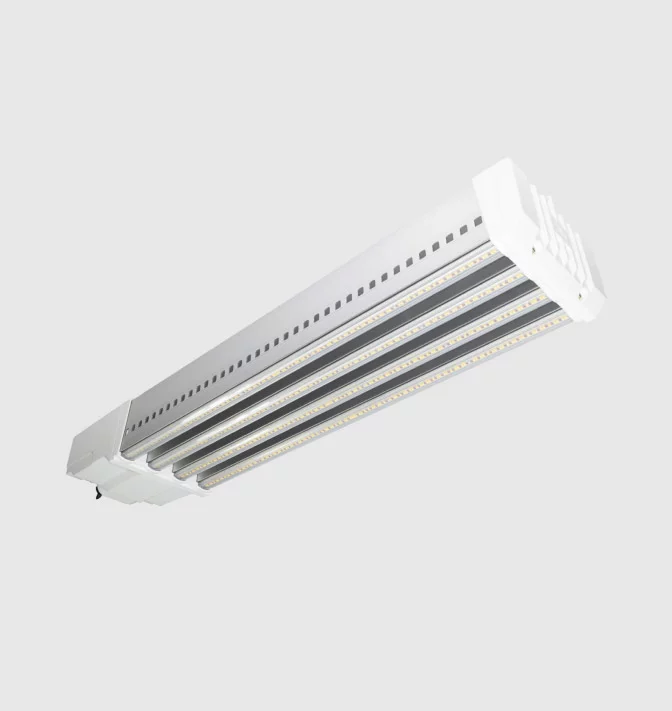
- Efficient LED technology from the DLI product range, which supports productive cultivation at lower energy consumption.
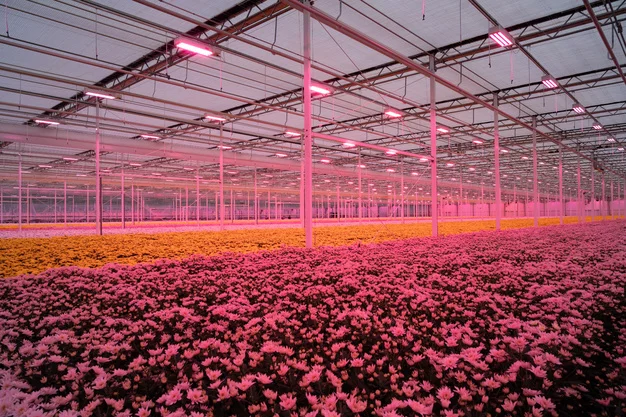
- Proven practical results in real greenhouses, as shown in projects such as Project Red Harvest.
- Continuous involvement throughout the growing season, with performance optimization based on measurements and crop response.
Planning a new installation or evaluating an existing one? Contact the DLI team to discuss your crop, your greenhouse, and the uniformity level your business case requires.