A change in crop rotation alters nearly every financial assumption behind a greenhouse lighting investment: light levels, operating hours, energy consumption, revenue per square meter and fixture lifespan requirements all shift with the crop. A business case built for one crop rarely holds unchanged for another.
The key driver is the gap between the crop the lighting was sized for and the crop it will actually serve. This article covers which assumptions move, how energy costs and fixture reuse are affected, what happens to payback and ROI, and how to stress-test a greenhouse lighting business case before committing capital.
Which financial assumptions change when the crop changes?
Switching crops changes the required light intensity, daily light integral, photoperiod, expected yield, market price and cultivation cycle length. Because each of these feeds directly into energy cost and revenue forecasts, a rotation change invalidates any greenhouse LED lighting ROI calculation that assumed a single, fixed crop.
The assumptions most exposed to a crop change include:
- Light intensity and spectrum: Tomato and cucumber typically justify high intensities, while lettuce reaches saturation at much lower levels.
- Annual lighting hours: Crop cycles, seasonal planting windows and photoperiod sensitivity determine how many hours the system runs.
- Revenue per square meter: Price per kilogram, yield per cycle and the number of cycles per year differ widely between fruiting vegetables and leafy greens.
- Labor and climate strategy: A different crop changes heating demand, humidity control and crop handling, which all interact with lighting heat output.
- Planned lifespan of the investment: If the crop mix changes during the fixture lifetime, depreciation should be tested against more than one scenario.
The practical consequence is that the business case should be built around a crop portfolio over the full fixture lifetime, not a single season.
How does crop choice change lighting energy costs?
Crop choice changes lighting energy costs because each crop needs a different light level, spectrum and number of lighting hours. A high-wire tomato crop with intensive supplemental lighting can consume several times more kilowatt-hours per square meter than a lettuce crop that saturates at a lower daily light integral.
Energy cost is also shaped by when the light is needed. Winter-heavy tomato and cucumber production in northern regions such as Canada, the northern US and Scandinavia concentrates lighting hours in periods when electricity tariffs, peak charges and grid constraints may be less favorable. Lettuce, with short cycles and lower light targets, offers more flexibility to shift or dim lighting to cheaper hours.
Three factors deserve explicit attention in the energy line of the model:
- Dimming range: Fixtures that dim effectively let growers match light output to crop demand and outside light, reducing wasted energy.
- Heat contribution: LED fixtures emit less radiant heat than older lighting, so heating demand may rise, particularly for crops with a high temperature setpoint.
- Local tariff structure: Time-of-use pricing, demand charges and grid capacity limits vary by country and influence which crop is cheapest to light.
A light recipe per crop turns these variables into a predictable kilowatt-hour figure that can be priced against local electricity rates.
Can existing LED fixtures be reused for a new crop?
Existing LED fixtures can often be reused for a new crop if their intensity range, spectrum flexibility and mounting configuration meet the new crop’s requirements. Reuse is most realistic when moving between crops with similar light needs, and least realistic when moving from a low-light crop to a high-intensity fruiting crop.
Before assuming reuse, check the following:
- Maximum output: Fixtures sized for lettuce may not deliver the intensity a tomato crop needs for full yield potential.
- Spectrum and control: Tunable systems adapt to different crop requirements, while fixed-spectrum fixtures limit the options.
- Mounting height and layout: Overhead top lighting suits some crops, while others benefit from interlighting within the canopy.
- Remaining fixture life: Undepreciated fixtures that cannot meet the new crop’s needs become a stranded cost in the business case.
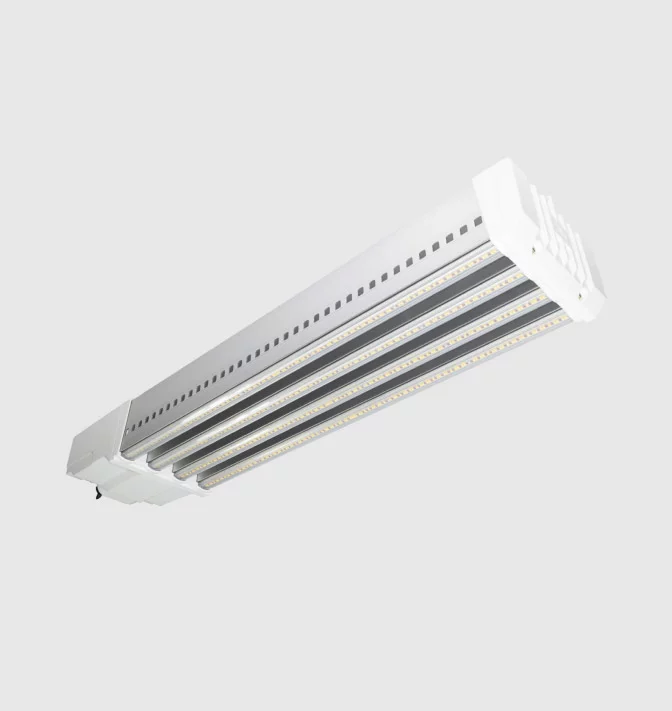
Where reuse is only partial, a staged approach works well: retain compatible fixtures, add or replace capacity where the new crop demands it, and update the controls. Reviewing the available horticultural LED fixtures against the new crop’s requirements is a sensible first step.
How does crop rotation affect payback period and ROI?
Crop rotation affects payback period and ROI by changing both sides of the equation: the added revenue the lighting generates and the energy it consumes. Crops with high value per square meter and strong light response shorten the LED lighting payback period in a greenhouse, while low-margin crops can lengthen it considerably.
A payback calculation assumes a stable crop. When rotation introduces a lower-value crop for part of the year, the average return on the lighting investment falls unless operating hours or intensity are reduced accordingly. Conversely, adding a high-value winter crop can improve the LED grow light return on investment by using fixtures during months that would otherwise be unproductive.
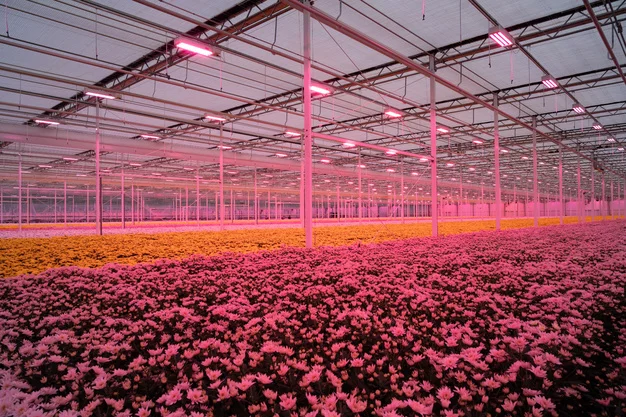
Utilization is the hidden variable. Fixtures that run 4,000 hours a year on a responsive crop recover their cost faster than the same fixtures running 2,000 hours on a crop with weak light response. Rotation plans should therefore be translated into expected annual operating hours and margin per cycle, not just an average yield uplift. Real-world results from growers show how this plays out, as illustrated by this tomato lighting project.
How should a lighting business case be stress-tested for rotation?
A lighting business case should be stress-tested by modeling several crop rotation scenarios against the same fixture investment and comparing payback, ROI and energy cost in each. If the investment only pays off under one crop plan, the risk is too concentrated.
A practical stress test follows these steps:
- Define two or three realistic rotation scenarios, such as a base plan, a crop-switch plan and a mixed-crop plan.
- Assign crop-specific inputs for each scenario: light level, hours, yield, price and cycle count.
- Vary energy prices by plus and minus a meaningful range to see how sensitive the result is to tariffs.
- Test fixture flexibility by checking whether the system can deliver each scenario’s light recipe without additional capex.
- Compare downside outcomes and identify the break-even yield or price at which the investment stops paying back.
The aim is not to predict the future crop mix but to confirm the investment remains defensible across plausible ones. A project that survives its weakest scenario is a far safer horticultural LED investment than one optimized for a single outcome.
How Dutch Lighting Innovations Helps with Crop Rotation and Lighting Investments
Dutch Lighting Innovations (DLI) is an independent Dutch specialist in professional horticultural LED lighting, and its approach is built around crop-specific design rather than one-size-fits-all fixtures. Through Tailored Lighting Solutions, DLI configures lighting around your crops, cultivation strategy and operational requirements, so the system can support your rotation plan instead of working against it.
Here is what that means in practice:
- Crop-specific light recipes for tomato, cucumber, lettuce and other greenhouse crops, defined before the investment is made.
- Rotation-ready configurations that account for the crops you plan to grow over the fixture lifetime, not just the first season.
- Energy-efficient LED technology that supports productive cultivation while keeping electricity costs controlled.
- Independent, direct advice from a team with practical horticultural expertise and flexible decision-making.
- Long-term partnership with continued involvement and performance optimization throughout the growing season.
If you are planning a crop change or evaluating a new lighting investment, contact DLI to review your rotation scenarios and build a business case that holds up under each of them.