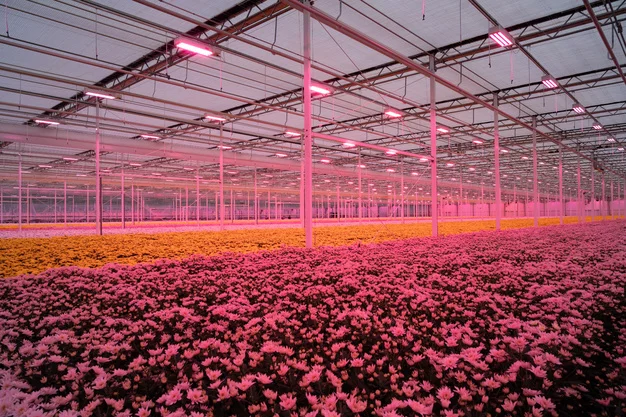
Switching from HPS to LED lighting reduces the heat a greenhouse receives from its lamps, so the heating system must supply more of the warmth the crop needs. HPS lamps convert a large share of their electricity into radiant and convective heat, while LEDs convert far more into usable light. The result is lower electricity use but a higher heating demand, especially on cold nights and in winter. Growers in Canada, the northern US, and Scandinavia feel this shift most, and the sections below explain how large the effect is and how to manage it.
Why does LED lighting increase greenhouse heating demand?
LED lighting increases greenhouse heating demand because LEDs emit much less heat than HPS lamps. An HPS fixture releases a large portion of its energy as heat, which warms the crop and air for free. Remove that heat source and the boiler or heat network must replace it.
In an HPS greenhouse, the lamps worked as a second heating system. Much of their output was infrared radiation that warmed leaves, structures, and air, and growers often reduced pipe heating whenever the lights were on. This overlap made lighting and heating a combined energy system that growers rarely separated in their planning.
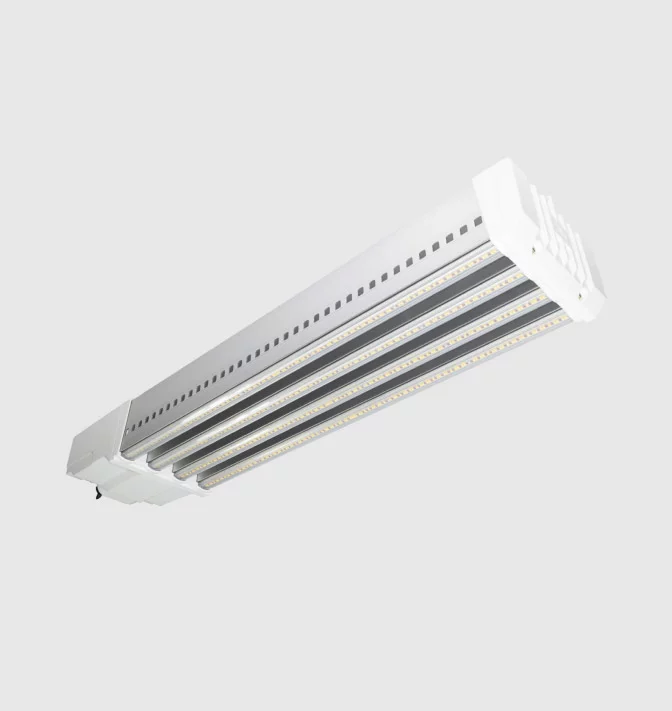
LED fixtures turn a larger share of electricity into photosynthetically active light. They still produce heat, but it is mostly conducted away through the fixture body rather than radiated toward the crop. The greenhouse therefore receives less free warmth per unit of light, which directly raises the demand on the heating system.
How much extra heating does a greenhouse need after switching?
The extra heating a greenhouse needs after switching depends on how much HPS heat it previously relied on, the installed light intensity, the climate zone, and the crop’s temperature setpoints. There is no single figure. Greenhouses with high light intensities in cold climates see the largest increase in heat demand.
Several factors determine the size of the gap:
- Installed light intensity: The more HPS capacity that was replaced, the more free heat is lost.
- Outdoor climate: Winter heat demand is highest in Canada, the northern US, and Scandinavia, so the lost lamp heat matters most there.
- Lighting hours: Crops grown with long photoperiods, such as winter tomato and cucumber, lose more heat over the season.
- Greenhouse construction: Double glazing, energy screens, and tight envelopes reduce how much extra heat is required.
- Crop temperature targets: Tomato and cucumber need warmer nights than lettuce, which raises the heating load.
Rather than relying on rules of thumb, growers should calculate the energy balance of their own greenhouse before the switch. That calculation shows how many hours per year the heating system must now cover.
Does lower electricity use offset higher heating costs?
In most cases, yes: the electricity saved with LED lighting usually outweighs the added heating cost, but the margin depends on local energy prices. Electricity is generally more expensive per unit of energy than heat from gas or a heat network, so reducing electricity consumption saves more than the replacement heat costs.
This price difference is the core of the business case. A kilowatt-hour of electricity usually costs considerably more than a kilowatt-hour of heat produced by a boiler, so replacing electrical energy with thermal energy is financially favorable. The net saving narrows if heating fuel is unusually expensive, if the greenhouse is poorly insulated, or if winter lighting hours are very long.
Growers should compare total energy cost, not electricity alone. A fair assessment includes:
- Electricity savings from lower lamp consumption
- Additional heating fuel or heat purchase
- Any grid connection or peak demand effects
- Crop results under the new light spectrum and distribution
Horticultural LED energy savings are therefore real, but they are best judged on the full energy balance of the greenhouse rather than on the lighting bill alone.
How can growers compensate for lost HPS heat?
Growers compensate for lost HPS heat by adding heating capacity where needed, improving the greenhouse envelope, and tuning climate control to use heat more efficiently. The most effective approach combines several measures rather than relying on the boiler alone.
Practical options include:
- Energy screens: Closing screens at night and during cold, dark periods keeps heat inside and reduces the extra demand.
- Grow pipe and rail heating: Placing heat close to the crop warms plants directly, replacing the radiant effect HPS once provided.
- Heat storage: Buffer tanks capture heat produced during the day for use at night.
- Improved insulation: Sealing leaks and upgrading glazing lowers the baseline heating requirement.
- Smarter climate control: Adjusting setpoints and ventilation strategies prevents heat from being wasted.
Greenhouses in colder regions often combine these measures with a heating system sized for the new reality. Planning this alongside the lighting design avoids undersized heating and costly corrections later.
Does LED change crop temperature and growth behavior?
Yes, LED lighting changes crop temperature and growth behavior because leaves no longer absorb the intense radiant heat from HPS lamps. Leaf temperature typically sits closer to air temperature, which affects transpiration, nutrient uptake, and development rate, so growers often adjust climate settings.
Under HPS, leaves were often warmer than the surrounding air. With LED, that difference shrinks, and the plant may transpire less and develop at a different pace if air temperature setpoints stay unchanged. Growers frequently find that crops respond to adjusted temperatures, humidity targets, and irrigation strategies after the switch.
Crop type matters. Tomato, cucumber, and lettuce each react differently to light spectrum, intensity, and leaf temperature. Monitoring leaf temperature, plant balance, and fruit set during the first season allows growers to refine setpoints. Interlighting and top lighting layouts also influence where heat and light reach within the canopy, making crop-specific light design important.
When is the best time to adjust heating strategy?
The best time to adjust heating strategy is before installation, during the lighting design phase, and then again during the first full winter after the switch. Planning ahead prevents undersized heating, while seasonal monitoring allows fine-tuning based on real crop and energy data.
A sensible sequence looks like this:
- Before the switch: Model the energy balance, check boiler and pipe capacity, and decide on screens or heat storage upgrades.
- During commissioning: Align lighting schedules with climate computer settings so heating and lighting work together.
- First winter: Track heat demand, leaf temperature, and crop response, and adjust setpoints as the season progresses.
- After the first year: Review total energy costs and optimize for the next season.
Treating the transition as an ongoing optimization, rather than a one-time installation, gives the best long-term results in 2026 and beyond.
How DLI Helps with the Switch from HPS to LED Heating Challenges
Dutch Lighting Innovations helps commercial growers manage the heat balance of an HPS-to-LED transition by designing lighting around the crop, the climate, and the greenhouse. As an independent Dutch specialist, DLI supports growers from the initial energy analysis through the growing season.
Here is what that looks like in practice:
- Crop-specific lighting design: Light intensity, spectrum, and layout are matched to tomato, cucumber, or lettuce cultivation, with the heat balance taken into account.
- Efficient fixtures: Growers can explore the DLI product range to find configurations that deliver the right light with the lowest total energy use.
- Proven results: Real-world experience from projects such as Project Red Harvest shows how tailored lighting performs in commercial cultivation.
- Season-long partnership: DLI stays involved after installation to help optimize climate and lighting strategy as the crop develops.
- Direct, personal support: Short lines and flexible decision-making mean questions about heating and crop response get fast answers.
Planning a switch from HPS to LED and want to understand the impact on your heating costs? Contact DLI to discuss a tailored lighting solution for your greenhouse.